
Almost every time I travel - airplanes, hotels, road trips, cruises - I come home with something. Not always a virus or a flu. Sometimes it is a different pollen I was not exposed to back home in San Diego. Sometimes it is the dryness from a week of relentless air conditioning. Sometimes it is just the post-trip slump where my body finally exhales and reminds me I was running on fumes. Cruise illness is not a unique cruise problem. It is a travel problem that happens to play out on a 4,000-passenger ship instead of in a hotel room. Here is what I actually do when I am the one who gets sick onboard - what is worth a visit to medical, what is not, what it really costs, and why the post-cruise slump people now joke about is the same thing we used to call "got the flu after vacation."
If you are reading this from your cabin, here is the short version:
- Most "cruise cough" is dryness, not a virus. Cruise ship air is dramatically drier than what your body is used to at home. Hot showers, hydration, and balcony air help more than you think.
- If you have a fever, chest pain, breathing trouble, or symptoms that are getting worse - go to medical. Otherwise, you can usually ride it out in the cabin.
- Pack a small pharmacy before you sail. Onboard pricing for over-the-counter meds is brutal. One passenger reportedly paid almost $400 for Benadryl from the medical center.
- Cruise medical care is expensive and inconsistent across lines. Standard consultation runs $100 to $200. Cabin visits are $300 to $600. Real bills can hit five figures fast.
- Medicare does not cover international waters. Standard travel insurance often will not pay until your health insurance denies, and your health insurance will deny because the care happened abroad.
- Be a good cruiser if you are sick. No hot tub, no gym, no bar coughing on people. Wash your hands, mask up in crowds, skip handshakes.
- Want a hand finding the right ship and itinerary? Heather Hills at Flow Voyages can book a cruise that fits how you actually like to travel.
Cruise Illness Is Just Travel Illness
Before we get into what to do, the framing that helps most cruisers is this: cruise illness is not a separate category of disease. It is travel illness, in the same family as airplane illness, hotel illness, and the cold you always seem to catch a few days after a long road trip. Different climate, different humidity, different air, different pollens, different germs your immune system has never met, sleep disruption, schedule chaos, more food and drink than usual. Almost every cruise I take, something gets to me - and almost every time, it goes away naturally a few days after I get home. The point is not to scare you out of cruising. The point is to right-size what you are dealing with so you can act on it without panicking.
The medical literature backs this up. Upper respiratory infections account for 20 to 30 percent of all cruise infirmary visits, far more than any other category. Cruise ships are documented in the medical literature as "amplifiers of infectious disease" - close quarters, shared surfaces, recirculated air. None of that means cruising is dangerous. It means cruising is travel, and travel sometimes leaves you sneezing.
What "Cabin Cough" or "Cruise Cough" Actually Is (and Isn't)
Cabin cough is real, and it is one of the most common things passengers experience mid-voyage. It also is not always what people assume it is.
The cause is mostly environmental. Cruise ship climate-control systems run notably drier than the 30 to 60 percent relative humidity your body is used to indoors at home - closer to airplane cabin air than to your living room. When humidity drops below 30 percent, the mucous membranes lining your nose and throat dry out faster than your body can replace the moisture. The thin layer of mucus that traps dust, allergens, and microbes thins out, your throat feels scratchy, and you start a dry, irritation-driven cough. That is cabin cough. It is not a virus. It is your respiratory tract dehydrating in real time.
Add to that the fact that on an Alaska sailing you are breathing entirely different pollens and particulates than you would back home in San Diego or San Francisco - and on a Mexican Riviera sailing you are dealing with totally different ones - and you have a dry, irritated airway being introduced to allergens it has never filtered before. That cough you developed on day three is often a hybrid of dry-air irritation and a baseline allergic response, not the start of an actual cold.
How to Tell the Difference
A typical cabin cough feels like a nagging dry irritation. No fever. No body aches. Often improves with humidity and hydration within a day. A real respiratory infection adds fever, body aches, fatigue beyond the cruise norm, productive cough with colored mucus, sore throat that does not improve with lozenges, or chest tightness. The first one you ride out in the cabin. The second one is a phone call to medical.
Cruise Pick of the Month

Virgin Voyages Mexican Riviera, October 2027
Why we picked it: adults-only, with tips and most dining included.


Promoted by FlowAds

What I Actually Do in the Cabin When I Get Sick
My personal cabin protocol when I feel like something is brewing:
- Hot shower steam, multiple times a day. If you do not have a balcony or are sailing somewhere dry and cold, this is the closest thing to a humidifier you can manufacture. Run the shower as hot as it will go for ten minutes with the bathroom door closed. Sit on the floor and breathe. The change in your throat after one session is real. Absolutely do not go to the spa or a steam room to do this!
- Step out on the balcony if you have one. Tropical and coastal humidity is medicine for a cabin cough. Even five minutes of warm, humid outdoor air resets your respiratory tract. In Alaska or other dry-cold itineraries, balcony time helps less and the steam shower trick matters more.
- Hydrate aggressively, and skip the bar until you are clearly better. Water, not cocktails. Alcohol pulls water out of you and weakens immune function - a dehydrated body cannot fight off whatever it is fighting. The bartender will still be there tomorrow.
- Throat lozenges and honey. Both work for irritation. Pack the lozenges; the cabin minibar will not have what you need.
- Sleep more than you think you need. The "I am missing the cruise" guilt of staying in for one night to recover is nothing compared to the guilt of being miserable for the rest of the sailing because you pushed through.
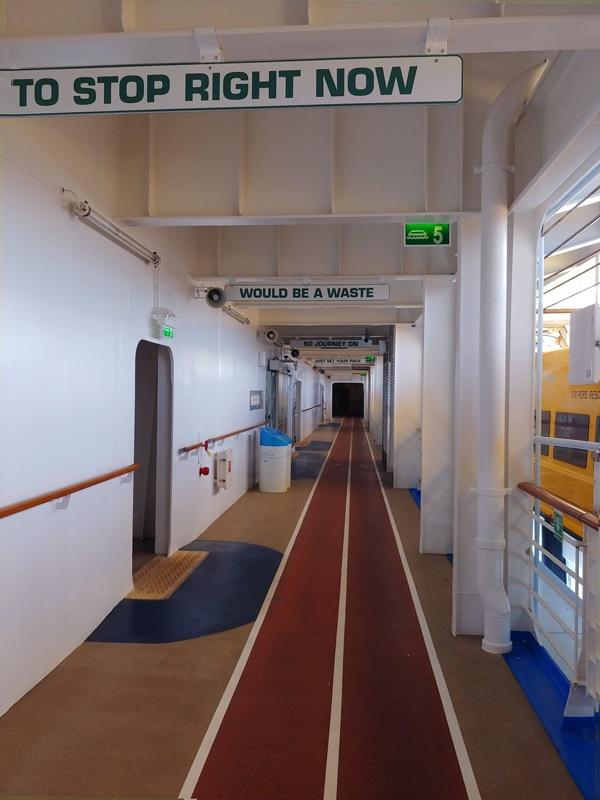
- Light outdoor walking, not the gym. Most ships have outdoor walking tracks. Get some sunshine and gentle movement without sharing equipment or breathing on people on a treadmill three feet away.
Pack a Small Pharmacy Before You Sail
This is the single biggest piece of advice I give every cruiser. Onboard medical-center pricing for over-the-counter medication is dramatic - one passenger reported being quoted nearly $400 for a small package of Benadryl. The cruise line's gift shop carries some basics at marked-up tourist prices. Pack what you would want from your home medicine cabinet, in your carry-on:
- Acetaminophen and ibuprofen (pain and fever)
- Decongestant and antihistamine (Sudafed, Claritin, Benadryl)
- Cough suppressant and throat lozenges
- Antidiarrheal medication (Imodium)
- Antacids (cruise food can do a number on you)
- A thermometer
- Hand sanitizer (the small bottle that lives in your pocket)
- Anything you take regularly - in original prescription packaging - plus a few days of buffer
The whole kit costs about $20 at home and saves you several hundred dollars and a frustrating walk to the medical center if anyone in your cabin gets so much as a headache.
The Cruise Medical Center: Real, Capable, and Inconsistent
Every large cruise ship has a medical center staffed by licensed physicians and nurses. They function as small urgent-care clinics rather than full hospitals - they can handle most respiratory infections, basic injuries, motion sickness, ear infections, dehydration, and stabilize bigger emergencies until you reach a port. The crew running them are experienced and they have seen everything.
What I tell every cruiser, though, is that the policies between cruise lines and even between ships in the same fleet are inconsistent. One ship may quarantine you in your cabin for 24 hours over a low-grade fever. Another ship's medical team will tell you to take some Tylenol and enjoy the rest of your day. The inconsistency creates a fear loop - cruisers worry they will be locked in their cabin or hit with a huge bill if they walk in - so they do not walk in when they should. That is the wrong outcome. Use discretion, but if you are actually sick, go.
The fee structure is genuinely expensive and you pay upfront, regardless of whether you have insurance. Typical 2026 pricing:
- Standard daytime consultation: $100 to $200
- After-hours or in-cabin visit: $300 to $600
- Common medications: $10 to $50
- X-rays: $200 and up
- Lab tests: $100 to $300
- IV fluids and treatment: $200 to $500
The line will charge your onboard account directly, and the doctors are typically independent contractors rather than cruise line employees - which matters for insurance.
The Norwegian Encore Cautionary Tale
In January 2025, a Minnesota man named Mike Cameron and his girlfriend, Tamra Masterman, were on a free Norwegian Encore Caribbean sailing out of Miami when Cameron came down with the flu. He visited the ship's medical center, received IV fluids and was given a catheter, and recovered in about three days. The bill was $47,000. The cruise line charged the two credit cards on file and maxed them both out, leaving an outstanding balance of $21,000. The couple had purchased Norwegian's own travel insurance with $20,000 in medical coverage, but they got caught in exactly the loop you want to avoid: the travel insurer would not pay until the primary health insurer denied the claim, and the health insurer denied it because the treatment occurred outside the U.S. Norwegian later said the cruise line was reviewing whether the charges were typical.
That case is an outlier in scale, not in pattern. Bills of $2,000 to $5,000 for a serious illness are not uncommon. Which brings us to insurance.
Travel Insurance: Why You Need the Cruise-Friendly Kind
The single most expensive misconception cruisers carry is that their regular health insurance covers them at sea. It generally does not.
- Medicare does not cover medical care in international waters. Coverage applies only when the ship is in U.S. territorial waters or within six hours of a U.S. port. The vast majority of any cruise itinerary falls outside that window. Some Medicare Supplement (Medigap) plans - C, D, F, G, M, and N - include limited foreign-emergency coverage, but the limits are modest.
- Most private health insurance treats cruise medical care as out-of-network at best, and at worst denies the claim entirely as "treatment abroad."
- Cruise-line-issued travel insurance often runs into the same wall the Norwegian Encore couple hit - it is set up as secondary coverage and waits for primary insurance to deny first.
What you actually need is a third-party travel insurance policy that includes:
- Medical treatment coverage of at least $50,000 to $100,000
- Medical evacuation coverage of $250,000 minimum (cruise medevacs by helicopter run $50,000 to $200,000+, and a Caribbean-to-Miami flight has been documented at $85,000 for a single heart attack case)
- Trip interruption and quarantine-day reimbursement
- Pre-existing condition coverage if relevant to your situation
- Direct-pay rather than reimbursement-only structure for medevac, so the helicopter does not need your credit card before lifting off
For a typical cruise the policy costs $50 to $150 depending on age and trip length. Skipping it is the most expensive money you can save.
Should You Cruise With a Cold? Here Is the Honest Rule
Sometimes the cold lands the week before you sail. Regardless of your situation, though, take precautions such as avoiding crowds, wearing a mask, and being extra diligent at handwashing and other forms of sanitation. The decision is harder than people make it out to be. My honest rule:
- Mild head cold, no fever, three days past peak symptoms: probably fine to sail, but be the most disciplined cruiser onboard - mask in crowded venues, skip handshakes, eat at off-peak times, do not go to the hot tub or the gym.
- Active cold with congestion and a productive cough: judgment call, leaning toward not boarding. The first three days of a cold are the most contagious. Spreading it to an entire ship is the opposite of a vacation.
- Fever, vomiting, diarrhea, or flu-like symptoms: do not board. Cruise lines have explicit authority to deny boarding based on the health questionnaire, and you are about to spread something serious in close quarters. This is what trip-cancellation travel insurance is for. A documented illness from your own doctor lets the policy pay out and lets you reschedule.
If you are unsure, the right call is usually the conservative one. Most cruise lines will work with you on a future cruise credit if you self-disclose at the port rather than try to slip through the questionnaire and get caught at day-two medical.

If You Are Sick Onboard, Be a Good Cruiser
This is the part that genuinely matters to your fellow passengers. If you have something contagious, your behavior shapes whether twenty other people get sick or two hundred do.
- Stay out of the hot tub, the pool, the gym, and the spa. Hot tubs are the worst offender - warm water plus close contact plus shared use is a dream environment for everything you do not want to spread.
- Skip the bar if you are coughing. Coughing on people in tight venues will earn you the death stare you deserve. Order room service, drink ginger ale, watch a movie.
- Wash your hands constantly. Soap and water for twenty seconds, especially after coughing. Sanitizer between washes. Norovirus aside, soap is the best defense against all the standard respiratory pathogens too.
- Wear a mask in crowded indoor spaces. The social weirdness of pandemic-era masking has mostly worn off. In a packed elevator or a tight muster gathering, nobody is going to give you a hard time, and you will be doing everyone a favor.
- Skip handshakes. A wave, a nod, or a fist bump is fine. Cruise ship social culture has caught up with this since the pandemic - nobody will think you are rude.
- Eat in your cabin or off-peak. The buffet at peak time is the worst place for you and for everyone else.
The crew lives on the ship for months at a time. They genuinely want to stay healthy. Treat them and your fellow passengers the way you would want to be treated if someone else was the sick one.
When to Actually Go to Medical
Skip the medical center for routine cabin-cough irritation, mild head colds you can manage in the cabin, and minor seasickness (many cruise lines provide complimentary Bonine or Dramamine at guest services - ask before paying for medication). The obvious red flags from earlier - fever, chest pain, breathing trouble, productive cough with colored mucus - are reasons to go regardless. Beyond those, also go for:
- Severe dehydration - the kind where you have not been able to keep fluids down for several hours
- Symptoms that scared you when you woke up - that is your body telling you something
- Any injury beyond a minor scrape
The medical team will document your visit, charge your onboard account, and provide an itemized receipt for insurance claims. If they decide you need to be quarantined, they will explain the protocol, and the cruise line typically offers some form of future cruise credit for the lost days.
The Post-Cruise Slump (and Why Cruise Illness Is Just Travel Illness)
A meaningful percentage of cruisers come home and get sick within three to seven days. Pre-pandemic, this was just called the post-vacation slump. Then for several years it became the expectation - the joke was that someone in your group was definitely going to test positive on a few days after getting back and Reddit as well as Cruise Critic forums are full of these reports. As testing dropped off, the same pattern remains, just less labeled. People still come home sick from cruises about as often as they used to. They are mostly just not testing for what.
The medical reasons are well documented. Travel weakens immune function through sleep disruption, dehydration, schedule changes, and stress. Viral incubation periods of two to seven days mean the bug you caught on day six of the sailing reveals itself on day three after you get home. Dry cabin air primes your respiratory tract for infection. None of that is unique to cruising - it is the same pattern that follows a long flight, a hotel-heavy road trip, or a week at a busy resort. Cruise illness is travel illness, and the same habits that protect you everywhere else work onboard a ship: pack a small pharmacy, hydrate, sleep, step out of crowded spaces when you are not feeling great, and buy real travel insurance.
If you come home with something, treat it the way you would any cold or flu. Rest, hydrate, see your doctor if it gets worse or lingers more than a week. File your insurance paperwork promptly with the itemized ship receipt if you ran into significant medical care during the sailing. And give yourself permission to take it easy for a few days - the post-cruise slump is just your body finally putting down the weight it was carrying.
For the prevention side - what to do before you get sick, including reading a ship's CDC inspection score, the buffet protocol that actually matters, and what changed at the CDC in 2025 - see our companion piece: What I tell every cruiser about avoiding norovirus and the other bugs most do not mention.
And if you are looking at upcoming sailings and want a hand finding a ship and itinerary that fits how you actually like to travel - Heather Hills at Flow Voyages can help you book a cruise to Alaska, the Mexican Riviera, or anywhere along the Pacific coast. The right cruise for you is the one you can step off of feeling like you got a vacation, not like you survived one.
Thanks for reading. We hope this was helpful!
Why stop now?
Play Some Cruise Games | Ask or Answer A Cruise Question | Contact Heather to Book Your Next Cruise!