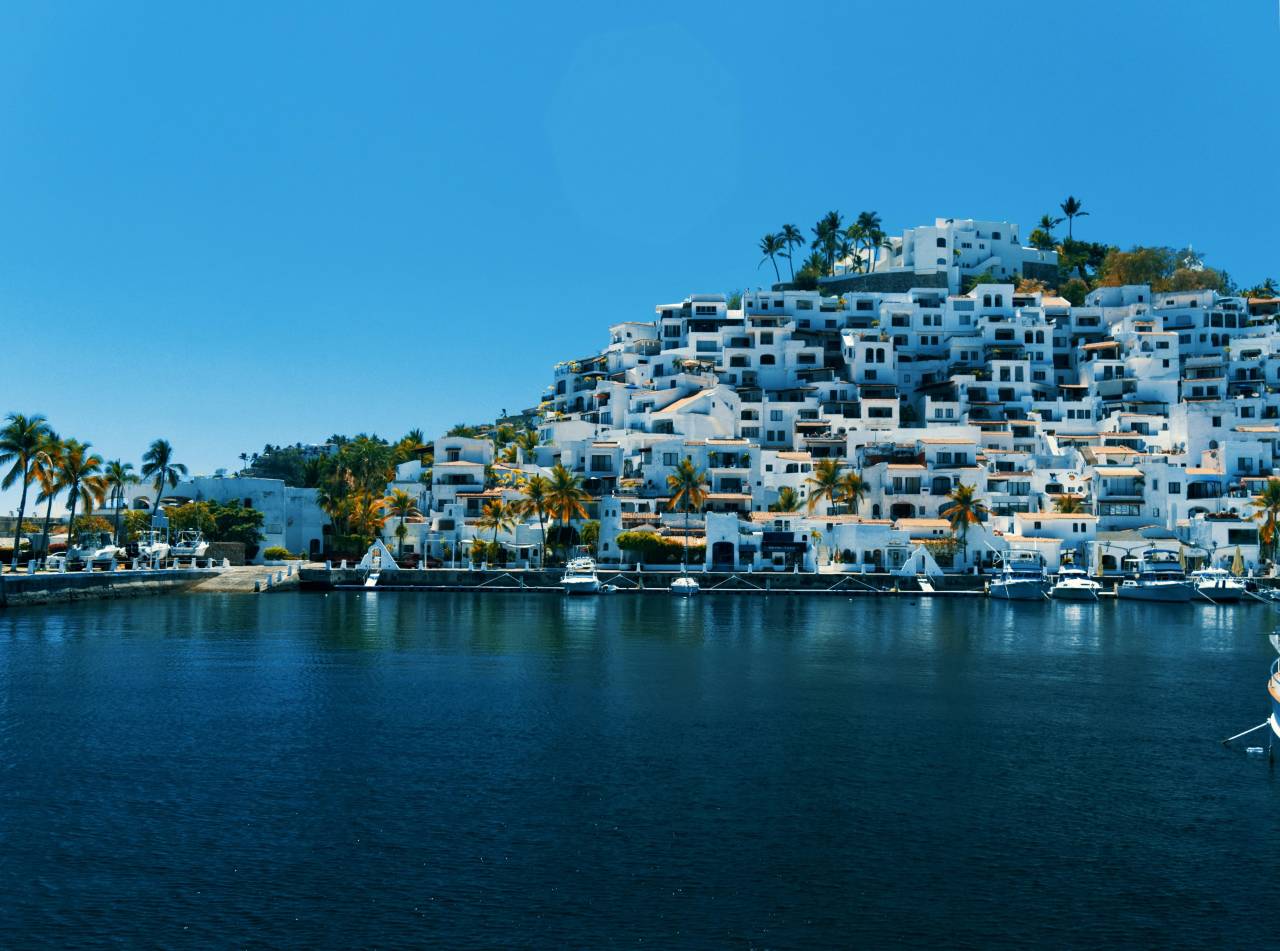
Manzanillo is the Mexican Pacific port that doesn't pretend to be anything else. Your ship docks at a pier ten minutes from the downtown zócalo, with Mexico's busiest container terminal on one side and a thirty-meter blue sailfish sculpture on the other. Across the Santiago Peninsula sits the other half of the city's split identity: a Moorish-fantasy resort from the 1970s that hosted Bo Derek's beach run in the film "10," and a string of tourist bays that feel worlds away from the freight cranes. For cruise passengers who want authentic coastal Mexico over resort-bubble polish, Manzanillo delivers a port day shaped by two bays, one working harbor, and a coastline that reaches south to a black-sand turtle sanctuary.
Manzanillo is a less-frequent call than Puerto Vallarta or Cabo San Lucas, appearing primarily on longer Pacific Coast voyages, Panama Canal transits, and the occasional repositioning sailing. Holland America Line and Princess Cruises are the regular callers, with Norwegian Cruise Line also visiting periodically. Heather Hills at Flow Voyages can help you find a sailing that includes Manzanillo as part of a longer Mexican Pacific itinerary.
Manzanillo is a docked-ship arrival with a walkable downtown and a working commercial harbor. Plan the port day around a short walk to the Malecón, with longer excursions booked in advance.
- Docked port, not tender: Cruise ships berth at the Manzanillo cruise pier in Manzanillo Bay, sharing harbor space with the container terminals. Expect an industrial first impression; the tourist side of the city is across the Santiago Peninsula.
- The zócalo is a walk, not a taxi ride: Jardín Álvaro Obregón and the Monumento al Pez Vela are a flat five-to-ten-minute walk along the Malecón from the cruise pier. No shuttle or taxi needed for the downtown experience.
- Currency: Mexican peso is preferred. US dollars are accepted at most cruise-facing businesses, but you get better rates in pesos at smaller vendors and local markets.
- Safety framing: Colima state carries a US State Department Level 4 "Do Not Travel" advisory, with an explicit carve-out allowing US government personnel in the central tourist and port areas of Manzanillo. Criminal competition in the state is over the commercial port's smuggling access, not over tourists. For any excursion beyond the Manzanillo tourist zone, stick to cruise-line shore excursions or vetted private guides.
- Booking guidance: Full-day Colima and Comala tours, Cuyutlán turtle sanctuary excursions, and sailfish charters are best booked through your cruise line or an established operator rather than arranged pier-side. Cruise-line shore excursions guarantee the ship waits for late returns; independent bookings do not. Heather Hills at Flow Voyages can coordinate itinerary-length planning and shore-side recommendations.
Why Manzanillo Is Worth Getting Off The Ship
Manzanillo is a city of two bays and two identities. Manzanillo Bay, on the south side of the Santiago Peninsula, is Mexico's busiest Pacific commercial harbor, handling more container traffic than every other Mexican Pacific port combined. The cruise pier (built 2010) sits inside that working harbor, a short walk from the downtown zócalo and the Malecón. Santiago Bay, on the north side of the peninsula, is the tourist and resort zone, with calmer swimming beaches and the hotels that cruise day-trippers taxi out to reach. Most Mexican Pacific cruise ports try to hide their industrial edge. Manzanillo doesn't, and the honesty works in its favor.
The city's tourism identity is built around sport fishing. Manzanillo is widely known as the Sailfish Capital of the World, a title the local tourism board proudly uses (and one that, while not an officially recognized designation, reflects a genuinely world-class offshore fishery that peaks from November through May). The Monumento al Pez Vela, a thirty-meter sailfish sculpture by Mexican monumental sculptor Sebastián (Enrique Carbajal), sits on the downtown Malecón as the city's waterfront landmark and the default cruise-passenger photo stop.

Promoted by FlowAds

Manzanillo's pre-Hispanic heritage belongs to the Capacha and Colima cultures, whose shaft-tomb burial tradition and famous ceramic dog effigies (xoloitzcuintli pottery) are collected at the university archaeology museum in town and at the La Campana and El Chanal archaeological zones about ninety minutes inland near Colima city. Those cultures were absorbed or extinguished during Spanish colonization, so the indigenous-heritage engagement here is historical rather than living: you engage it through the museum, the archaeological sites, and the zócalo around which the colonial city was laid out. It is a meaningful history, and it is honestly framed as history rather than as a present-day "village visit" that does not exist.
The second signature of a Manzanillo port day is Hollywood history. The Moorish-fantasy resort Las Hadas, on the Santiago Peninsula, was the 1979 filming location for Blake Edwards's comedy "10" and still operates today as Las Hadas by Brisas (full story in the Adults and Couples section below).
Tips To Make The Most Of Your Visit To Manzanillo
Manzanillo is a walkable-downtown port. For cruise passengers who want zero excursion planning, a one-hour Malecón loop covers the sailfish sculpture, the plaza, and a cafe lunch without leaving downtown.
The tourist beaches (Playa Miramar, Playa La Audiencia, Playa Olas Altas) are all on the Santiago Peninsula or in Santiago Bay, roughly twenty to twenty-five minutes by taxi from the cruise pier. Negotiate a round-trip fare with wait time rather than trying to flag a return taxi on the beach side. Playa Olas Altas lives up to its name (literally "big waves") with strong currents that suit experienced surfers, not casual swimmers. Playa La Audiencia and Playa Miramar are the safer family-swim options.
If you are planning a Cuyutlán turtle sanctuary excursion, verify the day of the week before committing. The El Tortugario conservation center has historically been closed on Wednesdays; a Wednesday cruise call that builds the port day around the turtle center can be a hard disappointment. Hatchling releases peak through the fall, so October and November cruise calls have the best odds of witnessing an active release. Winter sailings can still visit the sanctuary and its adjacent Palo Verde mangrove boat tour without an active release underway.
Colima state's Level 4 travel advisory is real and worth acknowledging on the planning side. The carve-out for the Manzanillo tourist and port areas is also real, and the cartel competition in the state is over commercial-port smuggling access rather than over cruise visitors. The practical effect for a cruise passenger is simple: do not wander inland on your own, and book any Colima or Comala excursion through your cruise line or a vetted operator rather than an ad-hoc pier-side driver. Once inside a reputable excursion or the downtown tourist zone, the advisory concerns do not materially apply to your port day.
Sun, heat, and hydration matter. The cruise season (October through April) lines up with Manzanillo's dry season, but January through March daytime highs routinely sit in the 80s Fahrenheit with reflected Pacific light that catches visitors off-guard. A hat, sunscreen, and water are worth the ten-second packing.
A note about the excursions below: tour operators and cruise lines offer many similar-sounding options at every port, and specific itineraries and pricing shift frequently. Treat these as examples of what's typically available at Manzanillo. For the latest options and personalized recommendations, contact Heather Hills at Flow Voyages.
Top Cruise Excursions For Families In Manzanillo
Manzanillo's family excursion slate leans into beaches, boats, and a genuinely distinctive conservation story south of the city. The downtown Malecón walk is the one free family activity that reliably works for every age group.
Malecón, Sailfish, And Zócalo Walk
The single easiest family activity in Manzanillo requires no booking and no transit. Step off the ship, turn onto the Malecón, and walk five to ten minutes along a flat paved waterfront to the Monumento al Pez Vela, the thirty-meter blue sailfish sculpture that serves as the city's visual identity. A few blocks inland, the Jardín Álvaro Obregón (the zócalo) has a traditional bandstand, bay-view benches, and cafes for a mid-walk pause. The whole loop runs sixty to ninety minutes at a relaxed pace. Accessible for most mobility levels on flat paved surfaces.
Cuyutlán Turtle Sanctuary And Mangrove Tour
About forty-five minutes south of the cruise terminal, the Centro Ecológico de Cuyutlán (El Tortugario) sits on a stretch of volcanic black-sand beach where olive ridley, green, and leatherback turtles have been nesting for generations. The sanctuary has released more than two million hatchlings over its history, and fall cruise calls (October and November especially) often coincide with active release events. A separate boat tour on the adjacent Palo Verde mangrove estuary adds crocodiles, iguanas, and over a hundred bird species to the visit. Half-day shore excursion; closed Wednesdays historically, so verify the operating day before building a port day around it.
Playa La Audiencia And The "10" Beach Run
On the west side of the Santiago Peninsula, Playa La Audiencia is the calmest family swimming beach in the Manzanillo cruise-day radius, sheltered from open-Pacific swell and backed by the Las Hadas resort. It also happens to be where Bo Derek ran down the beach in the 1979 film "10," which adds a family-friendly layer of movie-history color to the beach day. A round-trip taxi from the cruise pier takes about twenty-five minutes each way; negotiate wait-time pricing. Pair with a lunch or drink stop at one of the Las Hadas dining rooms if non-guest access is open that day.
Catamaran Snorkel To The San Luciano Wreck
A half-day snorkel trip from the Manzanillo marina visits the wreck of the San Luciano, a Victorian-era iron steamship that sits four feet below the surface of Manzanillo Bay. Originally built in 1892 in England as the Argyll, the ship ran aground in 1965 and was towed to the bay, where the shallow wreck is now a genuine snorkel site rather than a dive-only attraction. The combination of short boat ride, shallow water, and tropical fish activity makes this cruise-day-friendly for families with school-aged swimmers. Book through your cruise line or an established marina operator for ship-timing guarantee.
Top Cruise Excursions For Adults And Couples In Manzanillo
Adult and couples travelers in Manzanillo have a choice between inland volcano-country day trips, sport-fishing charters that earn the city its nickname, and a Moorish-fantasy resort day that pairs architecture with Hollywood history.
Las Hadas By Brisas Dining Or Day Pass
The resort that put Manzanillo on the international map still operates on the Santiago Peninsula, and its Moorish arches, whitewashed turrets, and private cove are open to non-guests through historic day-pass and dining arrangements. (Current pricing and availability shift; the resort is best contacted directly in advance for a cruise-day plan.) For couples, a long lunch at Legazpi or Los Delfines with a beach-club afternoon is the most interesting cruise-day use of the property, pairing a 1970s architectural time capsule with the adjacent Playa La Audiencia and the lingering cultural echo of the film "10." About twenty-five minutes by taxi from the cruise pier.
Full-Day Colima And Comala Excursion
An hour and a half inland from the cruise cranes, the Pueblo Mágico of Comala has been painted white by town decree since 1961 (red-tile roofs, whitewashed walls, a historic center declared a Monument Zone in 1988). From its central plaza you can see both of Colima's volcanoes, Volcán Nevado de Colima (dormant, snowcapped) and Volcán de Fuego (currently one of Mexico's most active volcanoes, erupting hundreds of times per year). The volcano is not visible from the Manzanillo cruise terminal; the Sierra Madre del Sur sits between the coast and the peak, and the volcano is an inland-excursion experience rather than a port-day skyline. The full-day shore excursion typically combines Comala with the La Campana pre-Hispanic archaeological zone outside Colima city and a downtown Colima stop. Nine-hour-plus port calls are most comfortable for the full combo; shorter calls are better suited to a half-day Comala-only version. Volcán de Fuego is closed to summit climbing due to ongoing activity; excursions view it from a distance.
Sailfish Charter From Manzanillo Marina
The sport-fishing reputation is where Manzanillo's Sailfish Capital claim meets reality. Half-day charters out of the Manzanillo marina target sailfish during the November-through-May peak, which aligns almost perfectly with Mexican Pacific cruise season. Boats typically run twenty-four to forty feet with two-to-six-angler capacity, and catch-and-release is standard for billfish per Mexican regulations. Cruise-day timing is tight (early disembarkation helps), so book through your cruise line or an established charter aggregator rather than a pier-side solicitation. Blue and black marlin overlap in the shoulder October-November window for anglers timing later-season cruises.
Comala Chocolate And Tuba Cultural Tasting
A lower-intensity Comala-area experience pairs the white-village walk with a regional beverage tasting. Colima is one of the few regions in Mexico where tuba, a lightly fermented coconut palm wine, is still made as a traditional drink. Tuba arrived in Mexico with Filipino sailors via the Manila Galleon trade route, giving it a genuine cross-Pacific trade-history pedigree rather than just a novelty hook. Paired with local chocolate from Comala's artisan producers, the combination makes a culturally rich slower-paced alternative to a full-day volcano country trip. Some cruise-line excursion programs offer a Comala chocolate workshop or tuba tasting rooted in this Manila Galleon heritage; availability varies, so check with your cruise line or Heather Hills at Flow Voyages for current offerings.
Free Or Low-Cost Things To Do In Manzanillo
Manzanillo's free attractions cluster along the downtown Malecón and the central plaza, all within walking distance of the cruise pier. The beaches require a taxi, but the transit is short.
Monumento Al Pez Vela And The Malecón
The thirty-meter sailfish sculpture on the downtown Malecón is a five-to-ten-minute walk from the cruise pier along a flat paved waterfront. The sculpture was created by Sebastián (Enrique Carbajal), a Mexican monumental sculptor whose other work includes "El Caballito" in Mexico City. The Malecón itself runs the length of downtown with benches, palm trees, Pacific views, and direct sight lines to both Santiago Peninsula and the container-shipping traffic that defines Manzanillo's working-port identity. The contrast between sailfish sculpture and cargo cranes is part of the experience.
Jardín Álvaro Obregón (The Zócalo)
Two blocks inland from the Malecón, Manzanillo's main plaza is a traditional Mexican zócalo with a bandstand, shaded benches, cafes, and the slow rhythm of a small coastal city. Also called Plaza Juárez locally. Five-to-ten-minute walk from the cruise pier. Pair with a cafe lunch for a downtown loop that requires no transit and no reservations. This is where the original colonial city was laid out and where the indigenous settlement of Manzanillo once stood before Spanish contact.
Museo Universitario De Arqueología De Manzanillo
The university archaeology museum near the San Pedrito roundabout holds pre-Hispanic artifacts from the Capacha and Colima cultures, including the famous shaft-tomb ceramic dog effigies (xoloitzcuintli pottery) that are the Colima region's most recognizable pre-contact artwork. A short taxi from the cruise pier; admission is modest. Museums in the region often close Mondays, so verify the operating day before planning around this stop.
Cuyutlán Black-Sand Beach Walk
For cruise passengers who arrange a private Cuyutlán taxi without paying for the full Tortugario excursion, the black-sand beach itself is a free experience. The sand is real volcanic ash from Colima's volcanoes rather than marketing color, and the long-period southwest swells that break here have earned Cuyutlán a second, lighter meaning for the term "Ola Verde" among surfers. Local history also remembers Ola Verde as the name of a devastating 1932 tsunami that hit this beach, killing dozens during a regional earthquake. Both meanings live side by side at Cuyutlán.
🚢 Ready To Book A Getaway? Here's Some More Inspiration:
Things To Do in Ensenada On a Cruise Ship Visit
Things To Do in Ensenada On a Cruise Ship Visit 
Cruising the Sea of Cortez with UnCruise Adventures
Cruising the Sea of Cortez with UnCruise Adventures 
Six Best Places To Watch For Whales On Your Cruise Without Leaving The Ship
Six Best Places To Watch For Whales On Your Cruise Without Leaving The Ship 
Hurricane Season on the Mexican Riviera: What Cruise Passengers Actually Need to Know
Hurricane Season on the Mexican Riviera: What Cruise Passengers Actually Need to Know 
🚢 Ready To Book A Getaway? Here's Some More Inspiration:
Things To Do in Ensenada On a Cruise Ship Visit
Things To Do in Ensenada On a Cruise Ship Visit Cruising the Sea of Cortez with UnCruise Adventures
Cruising the Sea of Cortez with UnCruise Adventures Six Best Places To Watch For Whales On Your Cruise Without Leaving The Ship
Six Best Places To Watch For Whales On Your Cruise Without Leaving The Ship Hurricane Season on the Mexican Riviera: What Cruise Passengers Actually Need to Know
Hurricane Season on the Mexican Riviera: What Cruise Passengers Actually Need to Know 
🚢 Ready To Book A Getaway? Here's Some More Inspiration:
Things To Do in Ensenada On a Cruise Ship Visit
Things To Do in Ensenada On a Cruise Ship Visit Cruising the Sea of Cortez with UnCruise Adventures
Cruising the Sea of Cortez with UnCruise Adventures Six Best Places To Watch For Whales On Your Cruise Without Leaving The Ship
Six Best Places To Watch For Whales On Your Cruise Without Leaving The Ship Hurricane Season on the Mexican Riviera: What Cruise Passengers Actually Need to Know
Hurricane Season on the Mexican Riviera: What Cruise Passengers Actually Need to Know
More Manzanillo Excursion Ideas
Beyond the main excursion categories above, Manzanillo offers additional experiences worth considering. Match these to your interests, physical activity level, and port-day window.
- Barra de Navidad Half-Day - About forty-five to sixty minutes north in Jalisco state, the colonial fishing village of Barra de Navidad was a Spanish shipbuilding site for the Manila Galleon trade route in the mid-sixteenth century and remains small enough to feel like a village. Arrangeable as a private half-day excursion; not typically on cruise-line menus.
- Playa Miramar Local-Beach Day - A short taxi or public-bus ride north to Santiago Bay's local swim beach, where Manzanillo families go on weekends. Boogie board rentals, mild surf, palapa restaurants, and a distinctly non-resort feel. Good authentic alternative to the La Audiencia / Las Hadas peninsula scene.
- Half-Day Comala Only - For cruise calls under nine hours, a streamlined version of the volcano-country day skips the full Colima city stop and focuses on Comala's white-village plaza, local cafes, and volcano viewpoint. Roughly ninety minutes each way.
- Sport Dive To The San Luciano Wreck - For certified divers (the snorkel version appears in the family section above), Manzanillo dive operators run guided descents around the wreck for a deeper look at the Victorian-era iron hull. Half-day excursion.
- Manzanillo Market Walk And Downtown Food Tasting - The central market and adjacent downtown streets are where local Colima cuisine lives, from seafood stalls to regional specialties. Half-day small-group walks with a local guide work well for couples and small groups; book through cruise-line shore excursions or a reputable local operator.
- Día De Los Muertos At The Zócalo - Late-October and early-November cruise calls coincide with Day of the Dead observances in the downtown plaza, including traditional altars and family remembrances. Manzanillo is not a top-tier Día de los Muertos destination (Pátzcuaro and Oaxaca hold that billing), but the local observance is genuine and worth the short walk from the ship if your call falls in the window.
- Sunset Views From The Malecón - For late-departure cruise calls, the Manzanillo Malecón provides a straightforward Pacific sunset experience without the excursion overhead. Most cruise ships depart before sunset, so confirm your ship's timing before planning around it.
Other Cruise Ports You Might Also Enjoy Visiting
If Manzanillo's working-port honesty and two-bay identity resonate with you, these Mexican Pacific destinations offer complementary angles on the region, from Zapotec ecological preservation and Hollywood-golden-age history to Maya archaeology and Burton-Taylor romance.
- Huatulco, Mexico - The nine-bay ecological-preservation coastline in Oaxaca, where an EarthCheck-certified destination pairs coral-reef snorkel access with Zapotec-Mixtec archaeological ruins at Copalita. Travelers who appreciate Manzanillo's cruise-line restraint will find a similarly lesser-visited port with a genuinely distinctive environmental conservation story.
- Acapulco, Mexico - The bay that hosted Hollywood's golden age before cruise itineraries reshaped around it, with the La Quebrada cliff divers and the colonial Fort San Diego museum still drawing cruise passengers who come for the history rather than the beach. Manzanillo's Las Hadas "10" story and Acapulco's mid-century Frank Sinatra and Liz Taylor era are the two halves of Mexican Pacific Hollywood history; visitors who enjoy one will find the other instructive.
- Puerto Chiapas, Mexico - At the far southern end of Mexico's Pacific coast near the Guatemala border, Puerto Chiapas pairs the Izapa pre-Maya archaeological zone with Soconusco cacao-farm visits. Travelers drawn to Manzanillo's authentic-over-touristy framing will find an even quieter port with strong Mesoamerican archaeology and living-culture content.
- Puerto Vallarta, Mexico - The Banderas Bay port that became internationally famous when Richard Burton and Elizabeth Taylor arrived during the 1963 filming of "The Night of the Iguana," a Hollywood-history parallel to Manzanillo's Las Hadas and "10" era roughly fifteen years later. Puerto Vallarta offers a larger-scale Malecón walk, a more developed restaurant scene, and the whale-watching hub of the Mexican Pacific.
- Zihuatanejo, Mexico - The Guerrero fishing village that refused to become Ixtapa, with Playa La Ropa's calm swimming water and the downtown waterfront's enduring local character. Travelers drawn to Manzanillo's non-resort honesty will find Zihuatanejo's preserved-fishing-village feel a companion experience on longer Pacific Coast itineraries.
Set Sail For The Sailfish Coast
Manzanillo rewards cruise travelers who want an honest Mexican Pacific port over a manicured resort stop. The zócalo is a ten-minute walk from the ship, the sailfish sculpture is the city's genuine landmark, and the two bays tell a split-personality story that most other cruise ports try to smooth over. Whether your port day is built around a downtown Malecón loop, a half-day to the Cuyutlán turtle coast, or a long lunch under the Moorish arches of Las Hadas, the experience is unmistakably Colima. For help identifying cruise itineraries that include Manzanillo and for planning the shore day, contact Heather Hills at Flow Voyages, who specializes in longer Pacific Coast cruise routings where secondary ports like Manzanillo appear.
Thanks for reading. We hope this was helpful!
Why stop now?
Participate In Our Polls | Ask or Answer A Cruise Question | Contact Heather to Book Your Next Cruise!