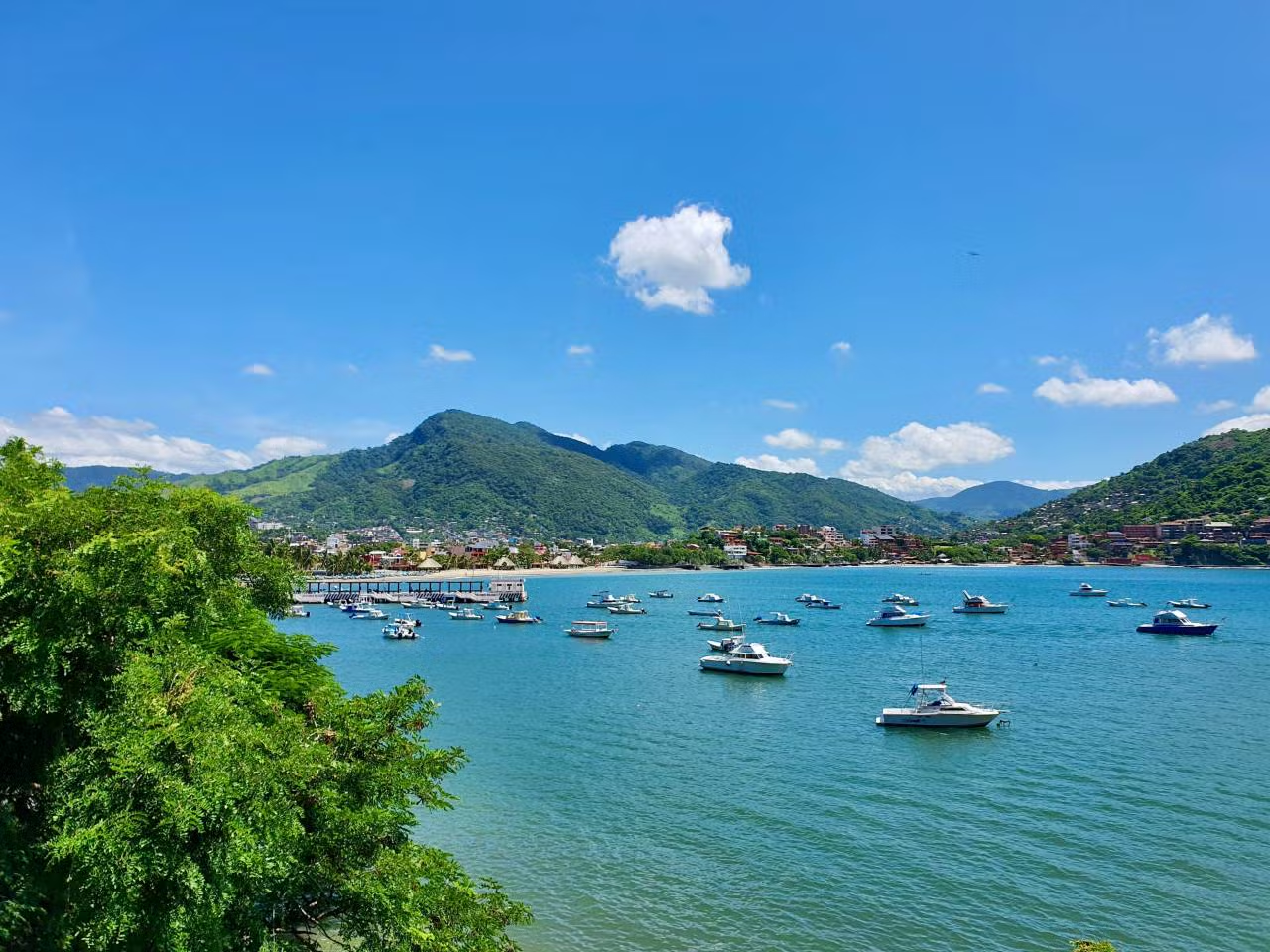
Zihuatanejo is the rare Mexican cruise port that kept its fishing-village character intact while a planned resort went up next door. In 1971, Mexico's federal tourism agency picked this stretch of Guerrero coast for the Cancun treatment; instead of bulldozing the old village, they built the resort (Ixtapa) on a coconut plantation five kilometers to the north. The original Zihuatanejo kept its working pangas, its cobblestone Malecon, and a downtown you can walk in fifteen minutes. Your tender lands at the municipal pier in the heart of that downtown, with the Paseo del Pescador, the recently-reopened Museo Arqueologico de la Costa Grande, Playa La Ropa around the south curve of the bay, and Playa Las Gatas a short water-taxi ride across all within reach. For cruise passengers who want the actual Mexican Pacific fishing-village experience rather than a manicured resort day, Zihuatanejo is one of the few ports where that still exists, precisely because the nearby resort took the pressure.
Zihuatanejo's 2026 cruise calendar is narrow. The port sees primarily luxury and long-itinerary operators (Crystal Cruises, Hapag-Lloyd's Europa line, Phoenix Reisen on world voyages) rather than the standard Mexican Riviera mainline calls that reach Cabo San Lucas, Mazatlan, and Puerto Vallarta. For cruise passengers whose itinerary does include Zihuatanejo, that narrowness is a feature - fewer ships means less cruise-industrial overlay on what is genuinely still a working fishing village. For current itineraries that call here and help matching a sailing to your travel window, contact Heather Hills at Flow Voyages.
Plan the port day around the downtown-walkable shape of Zihuatanejo and the bay-beach cluster, with logistics pre-confirmed for the few inland options worth considering.
- Tender port, downtown landing: Ships anchor in Zihuatanejo Bay and tender passengers to Muelle Municipal on Paseo del Pescador at the head of the downtown Malecon. Not Ixtapa Marina, not Puerto Mio. The museum, municipal market, Playa Principal, and the Malecon are all within a five-to-ten-minute walk of the tender landing; Playa La Ropa is a fifteen-to-twenty-minute walk or a short taxi around the south curve of the bay.
- Museum closed Mondays: The Museo Arqueologico de la Costa Grande reopened in April 2025 after a multi-year rehabilitation and is open Tuesday through Sunday, 10 AM to 6 PM. If your cruise call falls on a Monday, shift to the Paseo del Pescador walk, Playa La Ropa, or the Playa Las Gatas water taxi.
- Currency and language: Mexican pesos are preferred; US dollars are accepted at cruise-facing restaurants and shops. ATMs in downtown give better rates than shipboard conversion. Local bus service between Zihuatanejo and Ixtapa runs about 12 pesos one way (under a dollar); taxis to Playa La Ropa are roughly 60 to 80 pesos.
- Safety framing: Guerrero carries a US State Department Level 4 advisory that explicitly names Zihuatanejo and Ixtapa among the tourist areas where US government employees are restricted. The responsible way to visit on a cruise day is through your ship's shore excursion desk for any inland activity (Xihuacan archaeological site, long-distance trips to Barra de Potosi), or by staying within the walkable downtown and the bay-beach cluster (Playa La Ropa, Playa Las Gatas via water taxi) for self-directed exploration. Standard international-port sense applies; the advisory sits as backdrop, not headline.
- Booking guidance: The cruise-line call list at Zihuatanejo has shifted meaningfully toward luxury and long-itinerary operators in recent years; a planner like Heather Hills at Flow Voyages can match the right sailing to your travel window and confirm what is operational for your specific cruise date.
Why Zihuatanejo Is Worth Getting Off The Ship
Zihuatanejo is one of the Mexican Pacific's genuine survivors. In 1971, Mexico's federal tourism agency (FONATUR, the same planners who built Cancun) selected this stretch of Guerrero coast for a full resort-city development. The formula was straightforward: high-rises, golf, a marina, an international airport. But instead of building it on top of the existing fishing village, FONATUR put the new resort on an empty coconut plantation five kilometers up the coast. That resort is Ixtapa. The international airport that serves both towns opened in 1976. And Zihuatanejo, the older fishing village the planners chose not to bulldoze, kept its working pangueros, its cobblestone Malecon, its plaza, and a downtown you can cross on foot in fifteen minutes.
For cruise passengers, that accident of geography is the entire pitch. Your tender lands in the heart of the fishing village. The Paseo del Pescador, where small-boat fishermen still lay out the morning catch on tarps around six-to-eight AM, is immediately underfoot. The Museo Arqueologico de la Costa Grande, two minutes from the pier, reopened in April 2025 after a multi-year rehabilitation and holds the only substantive cruise-accessible exhibit anywhere on the Cuitlateca, the pre-Hispanic people whose territory covered the whole Guerrero coast before they were absorbed by later Mesoamerican powers. The iconic Playa La Ropa sits around the south curve of the bay, walkable or a short taxi. And Playa Las Gatas, the calm-water snorkel beach that local tradition credits to a Tarascan-era stone breakwater, is a five-minute water-taxi ride across the bay from the same tender pier. All of it unfolds at fishing-village scale, not resort-city scale.

Promoted by FlowAds

Zihuatanejo is also the destination Morgan Freeman's character heads toward at the end of The Shawshank Redemption, which over the past three decades has given the town a cultural footprint well outside its size. The actual beach scene in the 1994 film was shot at Sandy Point in the US Virgin Islands rather than here, but the reference has held up because the real Zihuatanejo still feels like the kind of place the character was chasing: a quiet Mexican fishing village that didn't turn into a resort. The version of the town the movie imagined is, more or less, the version a cruise tender still pulls into.
Tips To Make The Most Of Your Visit To Zihuatanejo
The port day at Zihuatanejo has two natural shapes. The downtown-walkable shape (Paseo del Pescador, Museo Arqueologico, Mercado Municipal, Playa Principal) is a compact two-hour loop on foot from the tender landing with no transit required. The bay-beach shape (Playa La Ropa for a swim and lunch, Playa Las Gatas by water taxi for snorkeling) adds a short walk or taxi to reach La Ropa, or a five-minute water-taxi crossing for Las Gatas. Most cruise passengers can combine both in a single port day if they commit early.
If your tender runs early enough, catch the tail end of the morning fish market on the Paseo del Pescador. Pangueros (small-boat fishermen) lay out the day's catch on tarps along the promenade roughly 6 to 8 AM for direct sale to restaurant buyers and local shoppers. Most cruise tenders start running around 7:30 to 8:30 AM, so early-disembarkation passengers catch the last of the market. This is as close as a cruise-port visitor gets to the working-village Zihuatanejo that existed before the resort era.
Guerrero carries a US State Department Level 4 advisory, and the responsible way to visit Zihuatanejo on a cruise day is through your ship's shore excursion desk or a travel-advisor-vetted private guide for any activity beyond the walkable downtown and the bay-beach cluster. The cruise-arrival pattern is structurally different from independent overland travel: by sea, same-day return, supervised excursions that stay in the tourist core. Ixtapa-Zihuatanejo has historically been Guerrero's more-stable tourist zone, with cruise tourism continuing through periods when Acapulco's schedule thinned, but the advisory's framework is the same. Standard international-port sense applies; the advisory is a backdrop, not the headline.
The Museo Arqueologico de la Costa Grande is closed Mondays. If your cruise call falls on a Monday, reshape the day around the Paseo del Pescador walk, Playa La Ropa, and the Playa Las Gatas water-taxi crossing, all of which run seven days a week. Any inland excursion to the Xihuacan archaeological site (about an hour south) should go only through a cruise-line shore excursion with vetted group transport, never as independent overland travel.
Cruise-season weather (November through April) is genuinely Zihuatanejo's best stretch: mid-80s Fahrenheit, minimal rainfall, high visibility for bay views and walking. Bring sun protection for the Paseo del Pescador walk and Playa La Ropa; late-season calls (March and April) can already feel hot by midday, so schedule beach-and-walking time earlier in the day.
A note about the excursions below: tour operators and cruise lines offer many similar-sounding options at every port, and specific itineraries and pricing shift frequently. Treat these as examples of what's typically available at Zihuatanejo. For the latest options and personalized recommendations, contact Heather Hills at Flow Voyages.
Top Cruise Excursions For Families In Zihuatanejo
Zihuatanejo's family-friendly excursion slate leans heavily on the walkable downtown and the sheltered bay. Playa Las Gatas delivers beginner snorkeling without the open-water skills most reef snorkeling demands, the Museo Arqueologico works for school-age kids with a short visit attention span, and the Paseo del Pescador is a moving-picture introduction to a Mexican fishing village that kids respond to on sight.
Playa Las Gatas Snorkel Via Water Taxi
Across the bay from the tender pier, reachable by a five-to-ten-minute water-taxi ride, Playa Las Gatas is a calm-water snorkel beach protected by a shallow coral-and-rock reef. Local tradition credits the calm water to a stone breakwater built before the Spanish arrival by a Tarascan king called Calzontzin; scholars treat the attribution as legend rather than documented history, but the story is part of why the beach feels distinctive. The Tarascan people (also known as the Purepecha) were the dominant pre-Columbian power around Lake Patzcuaro, the only major Mesoamerican culture never conquered by the Aztec. For cruise families, the practical appeal is that beginning snorkelers can see fish in shallow clear water without open-water skills. The water taxi departs directly from Muelle Municipal, runs about 80 to 100 pesos round trip, and tickets are purchased on the pier with no advance booking.
Museo Arqueologico de la Costa Grande
Two minutes on foot from the tender landing, facing Plaza Olof Palme on the Paseo del Pescador, the Museo Arqueologico de la Costa Grande reopened in April 2025 after a multi-year rehabilitation. Six thematic rooms hold roughly 4,000 pre-Hispanic artifacts spanning three thousand years, with the first substantive cruise-accessible exhibit on the Cuitlateca (the pre-Hispanic people whose territory covered the whole Costa Grande before they were absorbed by later Mesoamerican powers) and a dedicated Purepecha room connecting the coast to the highland kingdom of Michoacan. Admission is free or nominal, hours are Tuesday through Sunday 10 AM to 6 PM, and the visit fits comfortably in 45 to 60 minutes. For cruise families who want substantive cultural content without an inland excursion, this is the single highest-return stop in Zihuatanejo.
Paseo Del Pescador Morning Fish Market Walk
The 1.7-kilometer shoreline walkway running from the tender pier east to Playa La Madera is Zihuatanejo's fishing-village heart. Roughly 6 to 8 AM, pangueros bring in the day's catch and lay it out on tarps for direct sale; early-disembarkation cruise families catch the tail end of the market, which is a working-village moment kids respond to without being told why. The walk past palapa restaurants, art galleries, and fishermen's nets continues comfortably all the way to Playa La Madera (a ten-minute stroll) and keeps going to Playa La Ropa beyond that. No taxi required, no booking required, no cost.
Humpback Whale Watching (Seasonal)
If your cruise call falls roughly December 15 through March 20, humpback whales migrate through Zihuatanejo's offshore waters, with peak viewing January through March. Half-day whale-watching tours run from the municipal pier during the window; the Whales of Guerrero research project operates in these waters and partners with local tour operators, lending documented credibility to the regional migration. For cruise families whose itinerary lands in peak season, this is a legitimate wildlife opportunity that fits comfortably in a port-day window. Specific operators vary year to year; your ship's shore excursion desk or a travel advisor is the simplest booking channel.
Top Cruise Excursions For Adults And Couples In Zihuatanejo
Adult and couples travelers at Zihuatanejo get the slower-paced version of the fishing-village port day. The iconic swimming beach with a palapa-restaurant lunch, the water-taxi across the bay for snorkeling, and a genuine offshore sportfishing fleet are all doable in a single call, and the walkable downtown rewards travelers who prefer a less-developed port over a resort-scale one.
Playa La Ropa And The Silk-From-The-Sea Name
Playa La Ropa ("Clothes Beach" in Spanish) takes its name from a colonial-era shipwreck. Local history credits a Manila Galleon returning from the Philippines with a cargo of silk and fine fabric, lost somewhere off this coast in the 17th century and scattered across the sand for the fishing village to find. The specific ship has never been identified in archival records, but the name stuck, and the beach itself has been Zihuatanejo's iconic swimming beach since at least then. About 1.5 kilometers of soft sand on the south curve of the bay, calm water protected by the geography, and palapa restaurants lining the shore. Walkable from the tender pier in fifteen to twenty minutes along the bay-front path, or a short taxi. A beachfront lunch at one of the long-operating palapas is a legitimate cruise-day pattern.
Zihuatanejo Bay Snorkel And Sunset Cruise
A number of local operators run half-day snorkel tours across Zihuatanejo Bay (with stops at Playa Las Gatas and additional coves) as well as sunset sailing cruises. The bay is sheltered, the water is calm, and the Sierra Madre ridges rise directly behind the town for a photogenic return to the pier at the end of the afternoon. Specific operators and itineraries shift year to year; your ship's shore excursion desk or a travel advisor is the right channel for matching a current operator to your cruise date. For couples with a longer port call, a sunset cruise extends the experience into the evening, though departure cutoff times need to clear your ship's call-back window.
Offshore Sportfishing Charter
Zihuatanejo has a real offshore sportfishing fleet and hosts an annual billfish tournament. Sailfish are available year-round as the baseline game fish, and the peak billfish season (November through March) adds black and striped marlin, with dorado, tuna, and rooster fish also reliably on the roster. Half-day charters depart from the municipal pier; full-day options run from the Ixtapa Marina, which is about a fifteen-minute taxi north. This is a cruise-day-feasible option for travelers in the fishing demographic, but early-morning start is important to fit the full return window. Specific charter boats and crews change season to season; book through your ship's shore excursion desk or through a travel advisor who knows the current fleet.
Isla Ixtapa Day Trip
For cruise calls with a longer port day, Isla Ixtapa (also called Isla Grande) is a small offshore island accessible by water taxi from Playa Linda at the north end of Ixtapa. The transit adds up (short taxi from Zihuatanejo's tender pier to Playa Linda, then a ten-minute water-taxi crossing to the island), but the reward is three small beaches (including a live-coral snorkel beach), a short lighthouse walk, and whole-fish-grilled-over-wood-fire restaurants that specialize in pescado a las brasas. Total excursion runs four to five hours; plan for early disembarkation. For tighter port windows, Playa Las Gatas is the faster bay-snorkel choice.
Free Or Low-Cost Things To Do In Zihuatanejo
Zihuatanejo's downtown concentration is unusually strong for a Mexican Pacific cruise port. From the tender landing you can reach the Paseo del Pescador, the Museo Arqueologico, the Mercado Municipal, and Playa La Madera on foot, and Playa La Ropa is a fifteen-minute walk around the bay. The walkable core is a legitimate no-budget port day.
Paseo Del Pescador Walk (Tender To Playa La Madera)
The 1.7-kilometer shoreline walkway runs from the tender pier at Playa Principal east to Playa La Madera, lined with palapa restaurants, art galleries, fishermen's workshops, and small vendor stalls. Morning (6 to 8 AM) catches the tail end of the fish market; afternoon brings calm water and sunset light. The walk itself is free; coffee, agua fresca, or a snack at one of the palapas runs a few dollars. If you disembark early enough to catch the market, this is the best single fishing-village-authenticity moment in the Mexican Pacific.
Museo Arqueologico Free Admission
Admission to the Museo Arqueologico de la Costa Grande is free or nominal and the museum is two minutes from the tender pier. Six thematic rooms, 4,000 artifacts, Cuitlateca and Purepecha cultural context. Closed Mondays; open Tuesday through Sunday 10 AM to 6 PM. The single highest-return cultural stop at this port and one of the few substantive free cultural experiences in the cluster.
Playa La Ropa Beach Day
Fifteen to twenty minutes on foot from the tender pier, Playa La Ropa is the iconic calm-swimming beach. Setting up a towel on the public stretch of sand is free; palapa chairs and umbrellas from the beachfront restaurants typically run about the price of a drink or a lunch plate. The colonial-shipwreck name origin adds a layer for history-curious travelers. Sunset light on the bay from the south-curve beach angle is among the most photogenic in the region.
Mercado Municipal And Plaza Olof Palme
About a ten-minute walk inland from the tender pier, the Mercado Municipal is the working downtown market: handicrafts, tropical fruit, Mexican spices, fresh-catch fish and seafood stalls, prepared food. Authentic working-market character rather than a curated tourist market. The small Plaza Olof Palme, directly in front of the Museo Arqueologico and named for the assassinated Swedish prime minister, anchors the downtown cultural block with the museum and the footbridge over Canal de la Boquita.
🚢 Ready To Book A Getaway? Here's Some More Inspiration:
Things To Do In Loreto, Mexico On A Cruise Visit
Things To Do In Loreto, Mexico On A Cruise Visit 
Hurricane Season on the Mexican Riviera: What Cruise Passengers Actually Need to Know
Hurricane Season on the Mexican Riviera: What Cruise Passengers Actually Need to Know 
Things To Do In La Paz, Mexico On A Cruise Visit
Things To Do In La Paz, Mexico On A Cruise Visit 
Things To Do In Mazatlan On A Cruise Visit
Things To Do In Mazatlan On A Cruise Visit 
🚢 Ready To Book A Getaway? Here's Some More Inspiration:
Things To Do In Loreto, Mexico On A Cruise Visit
Things To Do In Loreto, Mexico On A Cruise Visit Hurricane Season on the Mexican Riviera: What Cruise Passengers Actually Need to Know
Hurricane Season on the Mexican Riviera: What Cruise Passengers Actually Need to Know Things To Do In La Paz, Mexico On A Cruise Visit
Things To Do In La Paz, Mexico On A Cruise Visit Things To Do In Mazatlan On A Cruise Visit
Things To Do In Mazatlan On A Cruise Visit 
🚢 Ready To Book A Getaway? Here's Some More Inspiration:
Things To Do In Loreto, Mexico On A Cruise Visit
Things To Do In Loreto, Mexico On A Cruise Visit Hurricane Season on the Mexican Riviera: What Cruise Passengers Actually Need to Know
Hurricane Season on the Mexican Riviera: What Cruise Passengers Actually Need to Know Things To Do In La Paz, Mexico On A Cruise Visit
Things To Do In La Paz, Mexico On A Cruise Visit Things To Do In Mazatlan On A Cruise Visit
Things To Do In Mazatlan On A Cruise Visit 
🚢 Ready To Book A Getaway? Here's Some More Inspiration:
Things To Do In Loreto, Mexico On A Cruise Visit
Things To Do In Loreto, Mexico On A Cruise Visit Hurricane Season on the Mexican Riviera: What Cruise Passengers Actually Need to Know
Hurricane Season on the Mexican Riviera: What Cruise Passengers Actually Need to Know Things To Do In La Paz, Mexico On A Cruise Visit
Things To Do In La Paz, Mexico On A Cruise Visit Things To Do In Mazatlan On A Cruise Visit
Things To Do In Mazatlan On A Cruise Visit 
🚢 Ready To Book A Getaway? Here's Some More Inspiration:
Things To Do In Loreto, Mexico On A Cruise Visit
Things To Do In Loreto, Mexico On A Cruise Visit Hurricane Season on the Mexican Riviera: What Cruise Passengers Actually Need to Know
Hurricane Season on the Mexican Riviera: What Cruise Passengers Actually Need to Know Things To Do In La Paz, Mexico On A Cruise Visit
Things To Do In La Paz, Mexico On A Cruise Visit Things To Do In Mazatlan On A Cruise Visit
Things To Do In Mazatlan On A Cruise Visit 
🚢 Ready To Book A Getaway? Here's Some More Inspiration:
Things To Do In Loreto, Mexico On A Cruise Visit
Things To Do In Loreto, Mexico On A Cruise Visit Hurricane Season on the Mexican Riviera: What Cruise Passengers Actually Need to Know
Hurricane Season on the Mexican Riviera: What Cruise Passengers Actually Need to Know Things To Do In La Paz, Mexico On A Cruise Visit
Things To Do In La Paz, Mexico On A Cruise Visit Things To Do In Mazatlan On A Cruise Visit
Things To Do In Mazatlan On A Cruise Visit 
🚢 Ready To Book A Getaway? Here's Some More Inspiration:
Things To Do In Loreto, Mexico On A Cruise Visit
Things To Do In Loreto, Mexico On A Cruise Visit Hurricane Season on the Mexican Riviera: What Cruise Passengers Actually Need to Know
Hurricane Season on the Mexican Riviera: What Cruise Passengers Actually Need to Know Things To Do In La Paz, Mexico On A Cruise Visit
Things To Do In La Paz, Mexico On A Cruise Visit Things To Do In Mazatlan On A Cruise Visit
Things To Do In Mazatlan On A Cruise Visit 
🚢 Ready To Book A Getaway? Here's Some More Inspiration:
Things To Do In Loreto, Mexico On A Cruise Visit
Things To Do In Loreto, Mexico On A Cruise Visit Hurricane Season on the Mexican Riviera: What Cruise Passengers Actually Need to Know
Hurricane Season on the Mexican Riviera: What Cruise Passengers Actually Need to Know Things To Do In La Paz, Mexico On A Cruise Visit
Things To Do In La Paz, Mexico On A Cruise Visit Things To Do In Mazatlan On A Cruise Visit
Things To Do In Mazatlan On A Cruise Visit
More Zihuatanejo Excursion Ideas
Beyond the main excursion categories above, Zihuatanejo offers additional experiences worth considering. Work with your travel advisor to match these to your interests, physical activity level, and port-day window.
- Ixtapa Day Trip - A short taxi or local bus (about 12 pesos one way) runs five kilometers north to the FONATUR resort zone, with high-rise hotels along Playa del Palmar, the Ixtapa Marina, and wider open-Pacific surf than the sheltered Zihuatanejo Bay offers. Useful as a half-day contrast to the fishing-village downtown for travelers curious about what Zihuatanejo chose not to become.
- Xihuacan Archaeological Site (Shore Excursion Only) - An hour south of Zihuatanejo near La Soledad de Maciel sits Xihuacan, a Mesoamerican site occupied for three thousand years and central to the Cuitlateca story. The site includes what may be the largest Mesoamerican ball court ever excavated, a one-hectare pyramidal base, and an on-site museum. Go only with a cruise-line-sponsored shore excursion with vetted group transport and a local guide; the overland route runs through inland Guerrero, where the Level 4 advisory applies without carve-out, and independent travel is not an appropriate cruise-day pattern.
- Sea Turtle Release (Seasonal, Narrow Window) - Conservation programs in the Ixtapa-Zihuatanejo area run hatchling releases at beaches outside the main La Ropa stretch (primarily Playa Larga and around Barra de Potosi) roughly August through November. Most core Mexican Riviera cruise sailings (December through April) fall outside the release window, so only October and November cruise calls will catch it. Check with your ship's shore excursion desk for current programs if your date overlaps.
- Zihuatanejo International Guitar Festival (March Only) - If your cruise call falls in early to mid-March, check for the Zihuatanejo International Guitar Festival, an annual week-long event that draws guitarists across classical, flamenco, gypsy-jazz, and American fingerstyle traditions to downtown venues. Founded by a handful of friends and grown into an authentic local event; most cruise calls will not coincide with the festival week, but March callers should check current dates.
- Barra de Potosi Lagoon And Bird Watching - About twenty-five kilometers south of Zihuatanejo, Barra de Potosi is a mangrove-lagoon village with boat tours, bird-watching, and palapa lunches on the beach. Cruise-accessible only via shore excursion or a travel-advisor-vetted private tour given the inland-Guerrero framing; budget a half-day with transit.
- Playa La Madera Lunch - A smaller, closer alternative to Playa La Ropa, Playa La Madera sits on the east side of the bay between Playa Principal and La Ropa, reached by a ten-minute walk from the tender pier along the Paseo del Pescador. Calmer than the open Pacific beaches, lined with palapa restaurants, and a reasonable swap for travelers who want a beach day without the longer La Ropa walk or taxi.
- Catamaran Snorkel And Dolphin Tour - Sailing catamaran tours with snorkel stops and seasonal wildlife viewing (dolphins and sea turtles year-round; humpback whales December through March) run from Zihuatanejo Bay. Departures and operators vary; work with your ship's shore excursion desk or a travel advisor for current options.
Other Cruise Ports You Might Also Enjoy Visiting
If Zihuatanejo's combination of working fishing village, walkable downtown, and bay-beach snorkel-and-swim resonates with you, these Mexican Pacific destinations offer complementary angles on the region.
- Acapulco, Mexico - The Guerrero peer about 240 kilometers south along the coast, Acapulco pairs colonial-maritime history (the star-shaped Fort San Diego from the 1610s, the Manila Galleon trade route) with the iconic La Quebrada cliff divers, who have plunged roughly 35 meters into a narrow ocean inlet daily since 1934. Travelers who appreciate Zihuatanejo's walkable scale and authentic character will find Acapulco offers the same shape at a larger city scale, with its own preserved-but-rebuilding 2026 port day.
- Manzanillo, Mexico - Up the coast in Colima, Manzanillo pairs a working freight port with a twin-bay beach layout that Bo Derek's 1979 film "10" made famous at Las Hadas resort. A genuine sailfish capital with year-round offshore billfish, the Volcan de Colima looming inland, and a cruise-traffic pattern that, like Zihuatanejo, sits outside the standard Mexican Riviera Core circuit. A natural pairing for travelers drawn to working-port authenticity with a side of sportfishing.
- Huatulco, Mexico - Further south along the Oaxacan coast, Huatulco is the other FONATUR-planned Mexican Pacific resort development and the interesting counter-case to Zihuatanejo's preserved village. Nine protected bays, federal conservation status, and EarthCheck certification; Huatulco shows what happens when a FONATUR plan lands on open coast with no older village to preserve or disrupt. For travelers curious about the FONATUR planning story, Zihuatanejo-plus-Huatulco is a pair of natural experiments on the same federal blueprint.
- Puerto Chiapas, Mexico - At the far southern end of Mexico's Pacific coast near the Guatemala border, Puerto Chiapas pairs Mesoamerican archaeology at Izapa (a pre-Maya ceremonial site with a claim on the calendar system that ultimately became the Maya long count) with the Soconusco cacao belt and the Tacana volcano. Travelers drawn to Zihuatanejo's Cuitlateca-and-Purepecha cultural layer will find Puerto Chiapas offers a complementary Mesoamerican-peer archaeology story in a similarly outside-the-Riviera port.
- Puerto Vallarta, Mexico - The Banderas Bay anchor of Mexican Riviera cruising, Puerto Vallarta offers a more developed contrast to Zihuatanejo: a walkable Malecon with the iconic Los Arcos sculptures, a historic downtown where Liz Taylor and Richard Burton famously lived at Casa Kimberly during the 1960s, and a working old-town fabric that (like Zihuatanejo's, at larger scale) still feels like a Mexican coastal town rather than a resort.
Set Sail For The Fishing Village The Resort Never Replaced
Zihuatanejo rewards cruise travelers who enjoy authentic Mexican coastal character at a walkable scale: the Paseo del Pescador morning market, the reopened Museo Arqueologico with its Cuitlateca and Purepecha rooms, Playa La Ropa's colonial-shipwreck name and calm-swim water, and the Playa Las Gatas water-taxi snorkel crossing all fit comfortably in a single port day on foot and a few short taxis. For help identifying cruise itineraries that include this increasingly rare luxury and long-itinerary port call, contact Heather Hills at Flow Voyages, who specializes in Mexican Pacific cruise planning and can match the right sailing to your travel window.
Thanks for reading. We hope this was helpful!
Why stop now?
Participate In Our Polls | Ask or Answer A Cruise Question | Contact Heather to Book Your Next Cruise!